
During the colder months, fresh fruit can feel like a letdown. Even when grocery stores stay well stocked, winter produce often lacks the brightness and flavor we associate with warmer seasons.
That’s why the return of a much-loved seasonal fruit Sumo citrus at Trader Joe’s feels like a small but meaningful win, offering shoppers a burst of sweetness right when it’s needed most.
Sumo Citrus at Trader Joe’s
One of winter’s most anticipated fruits has officially made its way back to Trader Joe’s shelves: Sumo Citrus. Known for its oversized shape, vibrant flavor, and easy-to-peel skin, this seasonal fruit typically appears for a limited window between January and April.
For many shoppers, the return of Sumo Citrus signals a turning point in winter produce. While summer berries are still months away, this citrus offers a reminder that bold, juicy fruit doesn’t have to wait until spring.
Aldi’s $10 Food Chopper Is Back—and Shoppers Say It Sells Out Every Time
Milano Cookie Introduces a Bright New Springtime Snack—and Fans Are Calling It “Amazing”
Sumo Citrus at Trader Joe’s Overview
| Detail | Information |
|---|---|
| Fruit Name | Sumo Citrus |
| Season | January to April |
| Type | Seedless citrus hybrid |
| Availability | Limited-time seasonal item |
| Key Traits | Description |
|---|---|
| Flavor | Sweet, mild, low acidity |
| Texture | Juicy with minimal pith |
| Peel | Very easy to remove |
| Size | Larger than most mandarins |
What Exactly Is Sumo Citrus?
Sumo Citrus is a premium citrus variety grown and marketed by AC Foods. It’s a carefully cultivated hybrid that combines characteristics of a mandarin, a satsuma, and a traditional orange. The result is a fruit that stands out both visually and in taste.
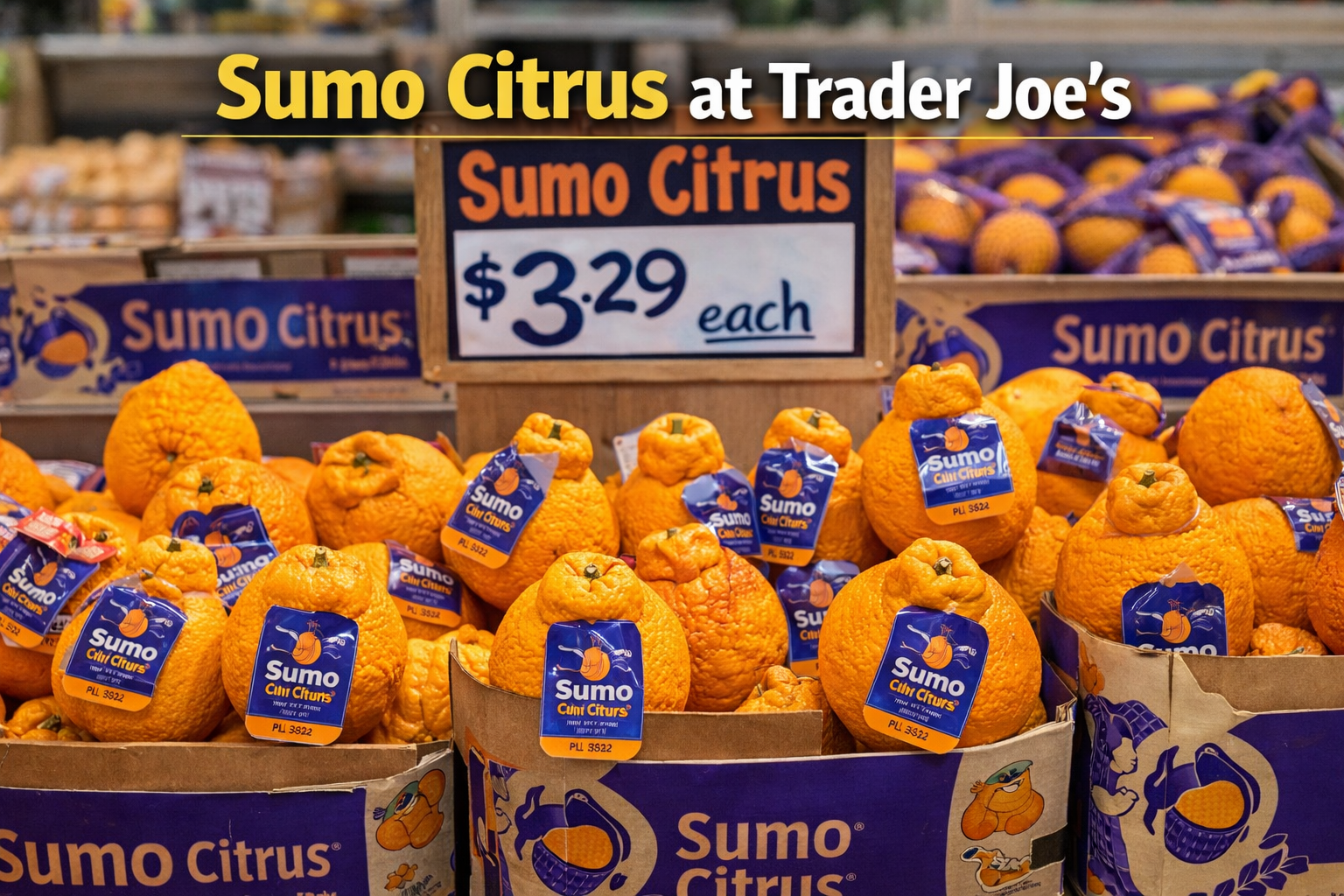
One of the most recognizable features of Sumo Citrus is its distinctive top knot, sometimes called a “bump,” which gives the fruit its unique look. Beneath the thick, textured peel is bright orange flesh that’s completely seedless and exceptionally juicy.
Flavor-wise, Sumo Citrus is known for its balanced sweetness. It leans sweet rather than tart, making it appealing even to those who typically avoid acidic citrus. The flesh is tender, and the pith is minimal, which contributes to its reputation as an easy, satisfying snack.
Why Trader Joe’s Shoppers Get So Excited
Among Trader Joe’s fans, Sumo Citrus has earned near cult status. Each year, shoppers eagerly wait for confirmation that the fruit has returned, often sharing sightings online as soon as it appears in stores.
Much of the excitement comes from consistency. While many citrus varieties can vary widely in quality, Sumo Citrus has built a reputation for reliably delivering sweetness and juiciness. Shoppers know what they’re getting, which makes the higher price easier to justify.
Online discussions frequently compare Sumos to other citrus options, with many fans ranking them above navel oranges and even standard mandarins. The fruit’s easy peel and lack of bitterness make it especially popular for quick snacks, lunchboxes, and post-dinner treats.
Sumo Citrus at Trader Joe’s: Price Debate
There’s no denying that Sumo Citrus is more expensive than most citrus fruits. Prices often hover around a few dollars per fruit, depending on location and availability. At Trader Joe’s, shoppers have reported prices in line with other major retailers, making it competitive but still premium.
Despite the cost, many fans consider Sumos a seasonal indulgence rather than an everyday staple. The limited availability makes them feel special, and shoppers often budget for them in the same way they might for holiday treats or specialty desserts.
For some, the price is justified by reduced waste. Because the fruit is consistently sweet and easy to peel, fewer pieces end up uneaten or discarded. In that sense, one Sumo Citrus can feel more satisfying than multiple lower-quality alternatives.
How Sumo Citrus Compares to Other Winter Fruits
Winter citrus options are plentiful, from lemons and limes to tangerines and grapefruits. What sets Sumo Citrus apart is its combination of size, sweetness, and texture.
Unlike grapefruits, which can be polarizing due to bitterness, Sumos are approachable and kid-friendly. Compared to tangerines or clementines, they’re larger and more filling, often replacing the need for multiple smaller fruits.
They’re also notably low in acidity, which appeals to people who find traditional oranges too sharp. This makes them versatile, suitable for eating on their own, adding to salads, or pairing with savory dishes.
Where Else You Can Find Sumo Citrus
While Trader Joe’s is a popular destination for Sumo Citrus, it’s not the only place shoppers may find the fruit. During peak season, Sumos often appear at other major retailers, including Publix, Sam’s Club, and Target.
Availability varies by region, and supplies can be inconsistent. Some stores sell them individually, while others offer multi-pack options. Because demand is high and the season is short, the fruit can sell out quickly regardless of retailer.
For shoppers without a nearby Trader Joe’s, checking multiple stores or visiting early in the season can improve the chances of finding them.
Best Ways to Enjoy Trader Joe’s Sumo Citrus
Most fans agree that Sumo Citrus shines best when eaten fresh. The fruit’s natural sweetness and juiciness don’t require embellishment, making it ideal as a standalone snack.
That said, it can also elevate simple recipes. Segments work well in winter salads, adding brightness to greens, nuts, and mild cheeses. The juice can be used in vinaigrettes, marinades, or even cocktails for a naturally sweet citrus note.
Because the peel is so easy to remove, Sumos are also convenient for on-the-go eating, whether tossed into a bag for work or enjoyed as a quick pick-me-up during the day.
Why Trader Joe’s Sumo Citrus Matters
The excitement around Sumo Citrus highlights how much seasonal eating still resonates with shoppers. Even in an era of year-round availability, limited-time produce creates anticipation and appreciation.
Seasonal fruits often taste better because they’re harvested at peak ripeness, and that difference is noticeable. Sumo Citrus benefits from this timing, delivering flavor that feels especially welcome during colder, darker months.
For many people, incorporating seasonal produce is also about breaking routine. A fruit that only appears once a year becomes something to look forward to, adding variety and joy to everyday meals.
Frequently Asked Questions
1. What is Sumo Citrus?
Sumo Citrus is a large, seedless citrus fruit that’s a hybrid of mandarin, satsuma, and orange varieties, known for its sweetness and easy-to-peel skin.
2. When is Sumo Citrus in season?
It’s typically available from January through April in the Northern Hemisphere.
3. Why is Sumo Citrus more expensive than other oranges?
The fruit requires careful growing conditions and longer cultivation time, which contributes to its higher price.
4. Can Sumo Citrus be found outside Trader Joe’s?
Yes, it may also be available at retailers like Publix, Sam’s Club, Target, and other grocery stores during peak season.
As winter stretches on, Sumo Citrus offers a simple pleasure that feels almost like sunshine in fruit form—proof that sometimes, the best way to brighten the season is found right in the produce aisle.
