
Grocery shopping has become noticeably more expensive for many households, and new data now puts a concrete number behind that feeling. A recently released economic report shows that rising food prices added hundreds of dollars to the average family’s annual grocery bill in 2025.
While some price shifts were driven by supply issues and global events, others stemmed from policy decisions and environmental challenges. Together, these factors reshaped what Americans paid for everyday food staples throughout the year.
Aldi’s $10 Food Chopper Is Back—and Shoppers Say It Sells Out Every Time
Milano Cookie Introduces a Bright New Springtime Snack—and Fans Are Calling It “Amazing”
Grocery Price Increase
A new report from the United States Congress Joint Economic Committee – Minority reveals that the typical American family spent about $310 more on groceries in 2025 compared to 2024. That figure represents roughly a four percent increase in annual grocery costs, adding further pressure to household budgets already stretched by inflation.
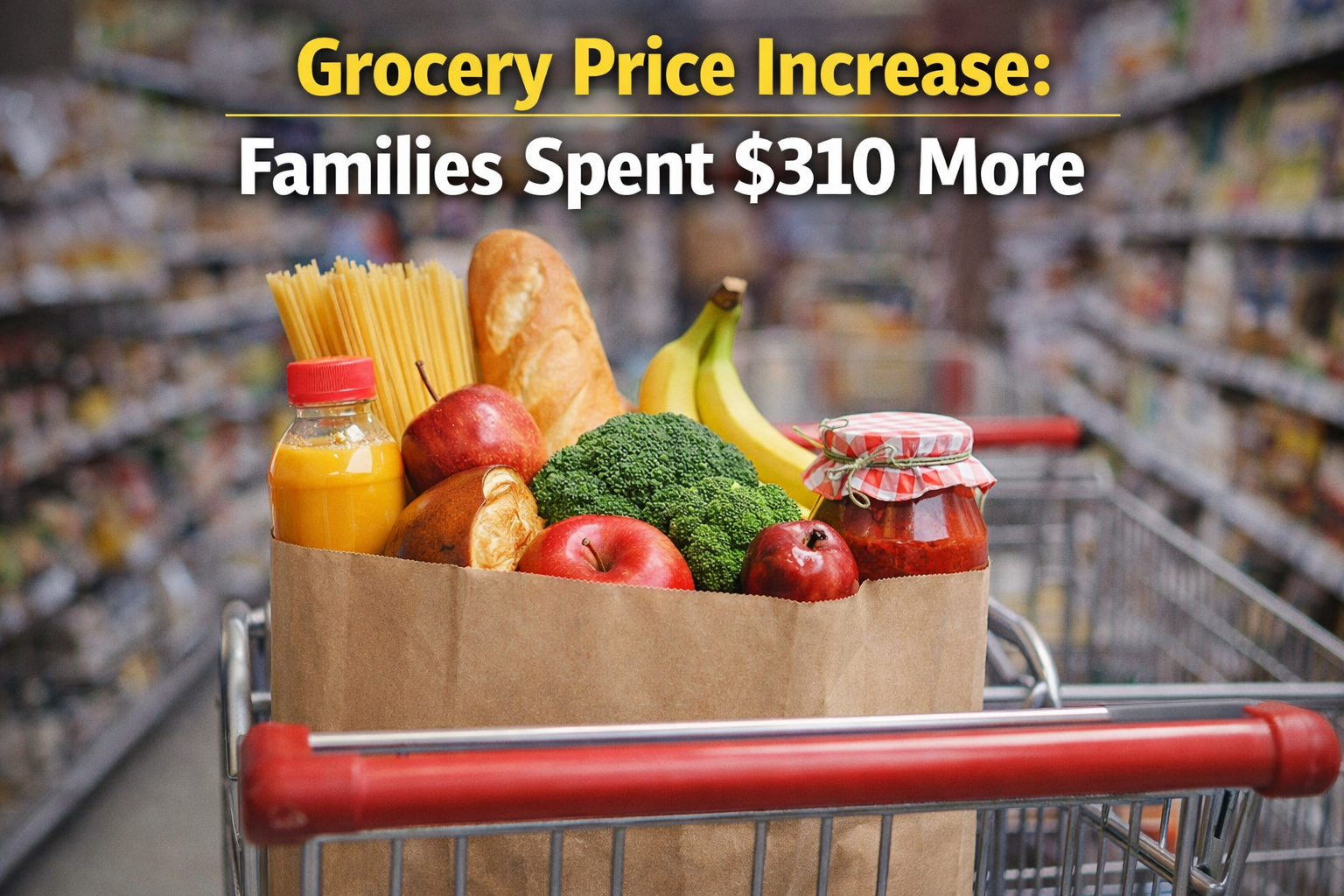
The findings are based on price changes across commonly purchased grocery items, showing that while some foods became slightly cheaper, most staples trended upward, with a handful of products accounting for the largest share of the increase.
Grocery Price Increase Overview
| Category | Key Findings |
|---|---|
| Total annual increase | About $310 more per household compared to 2024 |
| Items analyzed | 31 common grocery products |
| Products with price increases | 20 out of 31 items |
| Highest annual increases | Ground coffee, ground beef, eggs, candy |
Understanding Grocery Price Increase
The Joint Economic Committee examined the prices of 31 grocery items that most American families purchase on a regular basis. To ensure consistency, the analysis relied on Walmart pricing data combined with figures from the Bureau of Labor Statistics, which tracks nationwide price trends.
By comparing weekly grocery costs from 2024 and 2025, the Committee calculated the annual impact on household spending. This method helped isolate how incremental price increases throughout the year added up to a significant financial burden over time.
The study also aligned its conclusions with broader inflation data from the Consumer Price Index, which confirmed that food prices rose faster than most other consumer categories during the same period.
Grocery Price Increase: Check Sharpest Price Jumps
Among all the items analyzed, ground coffee experienced the largest annual increase. Families spent an average of $76.06 more on ground coffee in 2025 than they did the year before. According to the Committee, this spike was closely tied to a 50 percent tariff imposed on imports from Brazil in July 2025, which was later reversed in November.
Ground beef followed closely behind, with an annual increase of $70.99. Prices for ground beef climbed steadily throughout the year, rising about 15.5 percent overall. Multiple factors contributed to this trend, including drought conditions, historically low cattle herd sizes, and the same Brazilian tariffs that affected coffee imports.
Because both coffee and ground beef are staples in many households, even modest price hikes per purchase translated into significant annual increases for families.
Eggs, Candy, and Dairy Products Added to Grocery Price Increase
Eggs recorded the third-highest annual price increase in 2025, costing families about $51.66 more for weekly dozens than in 2024. One major contributor was an H5N1 bird flu outbreak, which disrupted poultry production and reduced egg supply, pushing prices higher across the country.
Candy also saw a notable increase, adding roughly $47.21 to annual grocery spending. Major manufacturers, including Hershey’s, warned consumers about price hikes due to rising cocoa costs. Poor crop yields in West Africa tightened global cocoa supply, though cocoa received a tariff exemption toward the end of 2025.
Other everyday items that rose in price included milk, Cheddar cheese, orange juice, chicken, bananas, potato chips, and ice cream. While none of these individually matched the increases seen in coffee or beef, together they contributed substantially to the overall rise in grocery costs.
Some Grocery Items Did Become Cheaper in 2025
Despite the general upward trend, not all grocery prices increased. The report found that several items actually declined in cost over the year, providing limited relief to consumers.
Products such as yogurt, ham, bread, tomatoes, and frozen dinners saw price decreases in 2025. These reductions were largely driven by improved supply chains, stabilized production costs, and competitive pricing strategies among retailers.
However, the savings from these lower-priced items were not enough to offset the increases seen across higher-impact staples. For most families, the net result was still a noticeable rise in overall grocery spending.
Grocery Price Increase: Future Forward
According to the Consumer Price Index, prices across all consumer categories were up 2.7 percent overall, with food experiencing the steepest climb. In December alone, food prices rose 0.7 percent, outpacing other spending categories.
Tariffs played a central role in shaping grocery costs, and their future remains uncertain. The country is still awaiting a ruling from the Supreme Court of the United States on the legality of recent tariff measures. That decision could significantly influence import costs and food prices in 2026.
Until then, economists expect grocery prices to remain sensitive to policy decisions, climate conditions, and global supply disruptions. For consumers, that means continued uncertainty at the checkout line.
Frequently Asked Questions
1. Why did grocery prices increase so much in 2025?
Higher tariffs, supply disruptions, disease outbreaks, and environmental factors all contributed to rising food costs.
2. Which grocery item increased the most in price?
Ground coffee saw the largest annual increase, costing families about $76 more in 2025.
3. Did any food prices go down last year?
Yes, items such as yogurt, bread, tomatoes, ham, and frozen dinners became slightly cheaper.
4. Will grocery prices rise again in 2026?
That will depend on inflation trends, tariff rulings, and global supply conditions, but prices remain vulnerable to further increases.
Overall, the study highlights how even small price changes across everyday items can add up, leaving American families paying hundreds more for groceries over the course of a single year.
Thank you for reading out this post on our portal.
